Capturing Speed: The Art of Motorsports Photography
From IndyCar straightaways to rallycross dirt corners — panning, positioning, and understanding the track to create the definitive motorsports image.
Motorsports photography is one of the most technically challenging and rewarding disciplines in the field. Cars moving at 200+ mph, tight racing lines, and rapidly changing conditions demand a photographer who can think as fast as the machines on track. Unlike most sports where the human body tells the story of motion on its own, a race car can look completely still in a photograph if you don't use the camera to create that sense of speed. That challenge — and the creative freedom it opens up — is what makes this genre so addictive.
Creating Motion with the Camera
The fundamental technique in motorsports photography is panning — tracking the car at a slow shutter speed so the vehicle stays sharp while the background streaks into motion blur. I shoot anywhere from 1/125s down to 1/60s or even slower depending on how much blur I want. A tack-sharp car against a frozen background looks like it's parked in a parking lot. You have to manufacture the sense of speed because a car doesn't show obvious motion the way a tennis player mid-swing does. The motion blur is the entire story.
Wide Angle, Up Close, in the Dirt
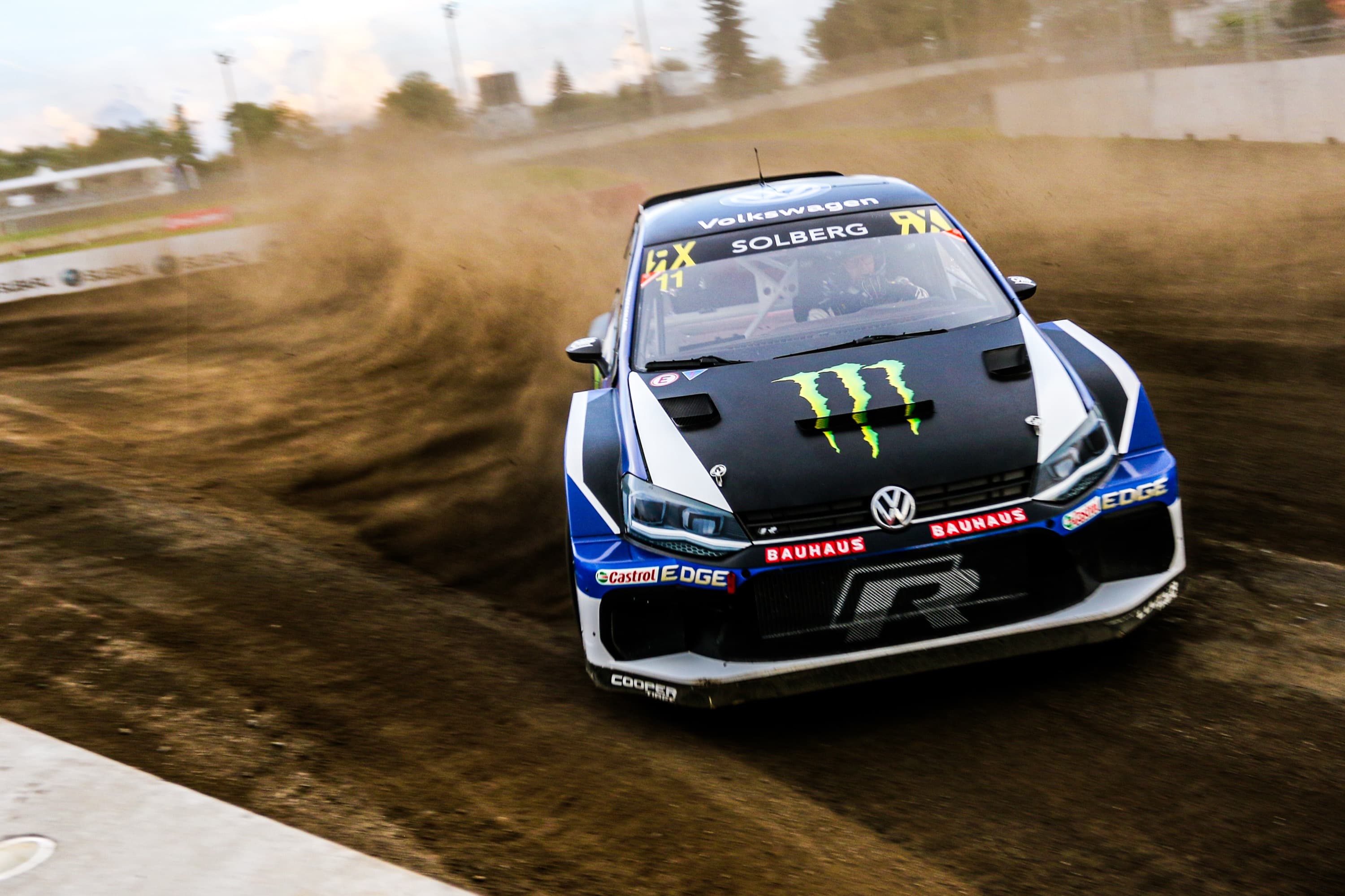
One of my favorite techniques — especially in rallycross — is getting as close to a corner as possible with a wide-angle lens. I photographed rallycross for many years, and some of my best work came from finding a spot right at the apex of a dirt corner, getting low, and shooting wide as the cars slid through sideways just feet away. The image on this post is a perfect example — that's Peter Solberg racing in World Rallycross at the Trois-Rivières circuit in Canada. I was right at the corner as he came through the dirt, car pointed sideways at me, and you can actually see his face through the windshield. A wide-angle lens at close range with a slow shutter creates an incredibly dynamic image — the dirt flying, the background streaking, the car filling the frame. It's a completely different feel than a telephoto panning shot, and it puts the viewer right in the action.
Long Lens Work
Of course, the telephoto panning shot is the bread and butter of motorsports photography. A 200–400mm or 300mm prime lets you isolate the car from across the track, compress the background, and create those clean motion-blur compositions. But long lenses also open up creative possibilities — shooting through objects between you and the car. Trees, fence posts, pit equipment — anything that adds foreground layers and depth to the image. In road course racing, I love shooting through tree gaps along the circuit. The trees blur into abstract shapes while the car stays sharp, creating an almost painterly effect that turns a straightforward racing photo into something artistic.
Scouting the Track
Motorsports circuits are massive, and scouting is everything. I walk the track during practice sessions to identify the spots — corners where cars bunch up, elevation changes that create dramatic angles, straightaways where they reach top speed. Most tracks have holes through safety fencing at designated photographer positions, but the best shots often come from getting creative beyond those standard spots. Getting up high in the grandstands for an overhead perspective. Finding an unusual angle through a gap in the barriers. Scouting is the difference between going home with the same shots everyone else got and coming back with something nobody expected.
Rallycross — Controlled Chaos
Some of my most exciting work has been in rallycross — Americas Rallycross, Nitrocross, and Red Bull Global Rallycross. These events are pure chaos in the best way. Cars launch off jumps, slide through dirt corners, and race inches apart. The tracks are compact enough that you can be dangerously close to the action, and the dirt roosts add a visual element you simply don't get on pavement. Every lap is different, every corner throws something new at you. The unpredictability is what makes it electric.
Working with Teams
Over the years, I've worked with teams like Andretti Autosport, Team Penske, and Bryan Herta Autosport. Each team has different needs — sometimes it's action shots for sponsors, other times it's pit crew documentation or driver portraits. Building those relationships means understanding their brand and delivering images that serve their story, not just generic racing photos.
Safety First
Motorsports is inherently dangerous, and that applies to photographers too. I always respect the safety protocols, wear proper gear, and position myself behind barriers. Getting close to the action is part of the job, but no photo is worth putting yourself or others at risk. Know your escape routes, stay aware of the cars at all times, and never get so locked into the viewfinder that you lose situational awareness.
From the controlled precision of IndyCar to the raw energy of rallycross, motorsports photography is about using every tool available — shutter speed, lens choice, position, creativity — to translate the visceral experience of speed into a single frame.
Interested in working together?
Get in Touch